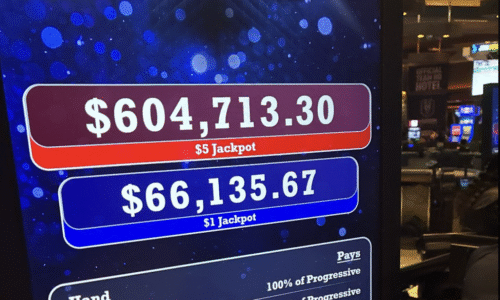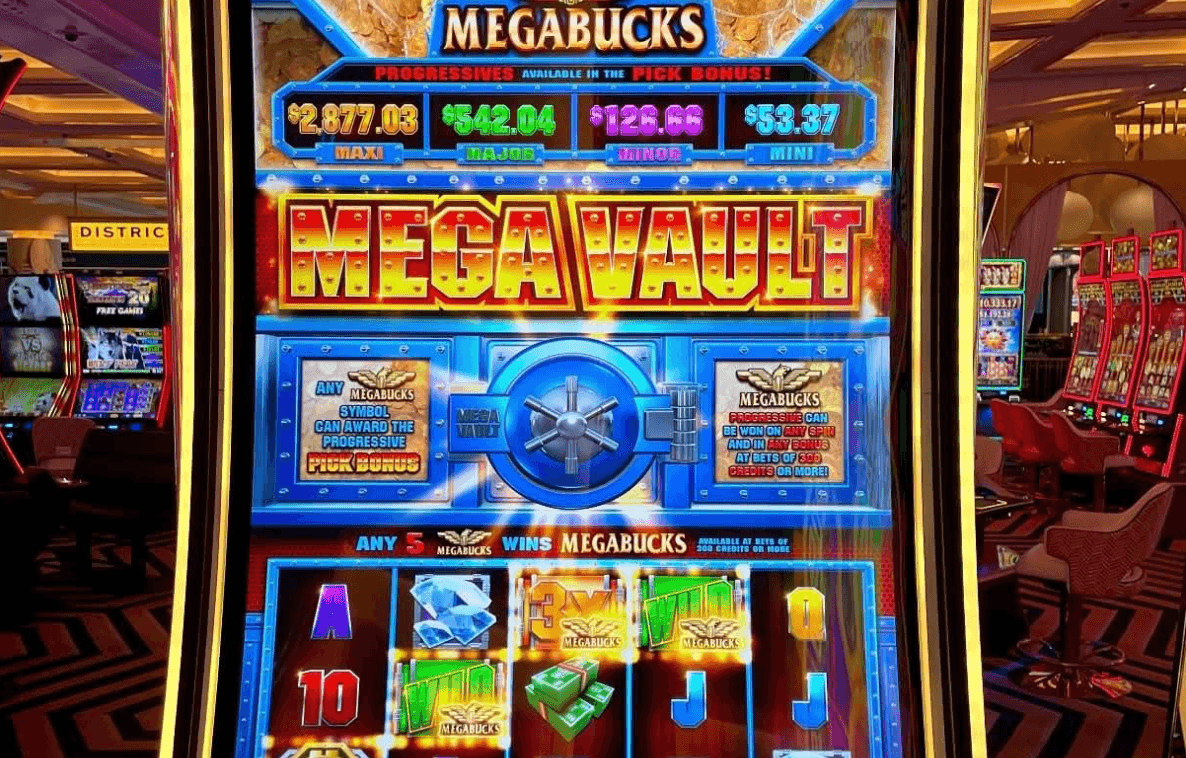
The Internal Revenue Service (IRS) has revealed that the federal tax reporting threshold for slot machine jackpots will rise to $2,000 starting January 1, 2026. The updated minimum will replace the longstanding $1,200 reporting requirement that has been on the books since 1977.
This is a big deal in Las Vegas. Period.
IRS Slot Jackpot Reporting Threshold to Change In 2026

The IRS confirmed this week that slot jackpot wins of $2,000 or more will trigger federal tax reporting starting in 2026. The agency’s guidance follows Congress’s passage of the One Big Beautiful Bill Act (OBBBA), signed into law in July. The bill amended several federal information reporting requirements.
Under current law, casinos are required to issue a Form W-2G when a player wins a slot jackpot of $1,200 or more. That threshold has remained unchanged since 1977, despite decades of inflation and the evolution of modern slot machines. With the threshold rising to $2,000, fewer mid-range jackpots will trigger mandatory reporting, reducing paperwork for both casinos and players.
In an email response to the media, an IRS media spokesperson said the new threshold is reflected on the draft 2026 Form W-2G and is tied to section 70433 of the OBBBA. The guidance confirms the effective date as January 1, 2026. It also notes that formal regulations implementing the change will be published as part of the IRS’s 2025-2026 Priority Guidance Plan.
How The New Development Plays Out Between Players and Casinos
Raising the reporting threshold to $2,000 is expected to ease operational hassle on casino floors. Under the current system, a mid-level jackpot that exceeds $1,200 causes a machine to stop. It then requires a casino employee to verify the win, issue a tax form, and process the payout.
This is a sequence known as a “handpay.” With the new $2,000 minimum, many wins that previously triggered a handpay will no longer require one. This allows machines to stay in play longer and reduces interruptions for players.
Industry advocates have long argued that the old $1,200 threshold does not reflect modern inflation or the current gambling landscape. Slot wins above $1,200 now occur more frequently than in decades past, especially on high-volatility machines. This makes the reporting requirement a burden for both casinos and patrons.
The updated IRS guidance also indicates that the new $2,000 threshold will be indexed for inflation in future years. That means the minimum reporting amount could rise again automatically beginning in 2027. If this becomes the case, it will align federal reporting rules more closely with economic conditions and the real value of jackpots over time.
Other Gambling-Tax Changes Tied to 2026 Tax Rules

The update in the IRS slot jackpot reporting threshold comes alongside other gambling-related tax law changes scheduled for 2026. One such change relates to the deductibility of gambling losses. According to reports on the broader tax reforms, the familiar rule allowing gamblers to deduct 100% of their documented losses against winnings will be adjusted. Subsequently, players will only be subject to a 90% deduction beginning in 2026, even when losses fully offset reported winnings.
State-level tax reporting requirements may still vary. While the federal threshold will rise to $2,000, individual states often set their own reporting limits and tax rules for jackpot winnings.
Players should check local tax law to understand how state thresholds and withholding interact with federal requirements.